
The Hidden Robbers: How Everyday Habits and Medications Deplete Your Vital Nutrients
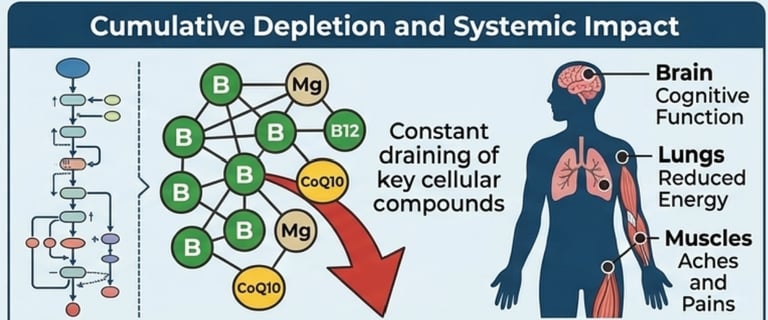
When we think about maintaining optimal health, we focus on what we put into our bodies—vibrant vegetables, lean proteins, healthy fats & oils, and targeted supplements. However, we rarely consider what is actively being drained out. Drug-induced nutrient depletion (DIND) and lifestyle-driven depletions are quiet epidemics. Everyday habits and common medications can act as chemical "thieves," blocking the absorption or accelerating the excretion of vital vitamins and minerals.
Cigarette Smoking & Vaping: The Double Threat to Antioxidants and Minerals
It is well-established that smoking introduces thousands of toxic compounds into the body, but its destructive impact on micronutrients is equally severe. Inhaling cigarette smoke floods the bloodstream with billions of free radicals, triggering massive oxidative stress. To combat this damage, the body rapidly uses up its internal stores of antioxidant vitamins.
The Modern Alternative: How Vaping Depletes Your Baseline
Many individuals have transitioned to electronic cigarettes under the assumption that vaping is a benign alternative to combustible tobacco. However, emerging clinical data demonstrates that vaping inflicts a distinct, aggressive tax on your body’s nutritional stores.
The Vitamin C Crash: Recent epidemiological studies, including data from the National Health and Nutrition Examination Survey (NHANES), reveal a startling reality: exclusive e-cigarette users exhibit depleted blood levels of Vitamin C that closely mirror those of traditional cigarette smokers. The aerosolized free radicals and high concentrations of nicotine delivered by vapes trigger intense localized oxidative stress in the lungs and vascular endothelial cells, rapidly exhausting your serum ascorbic acid.
Gut Malabsorption and Oxygen Restriction: Vaping introduces a cocktail of chemical additives, flavoring compounds, and residual heavy metals. These compounds cause systemic inflammation and can restrict oxygen delivery to the gastrointestinal tract. This disruption to the gut environment hinders the body’s ability to transport and absorb foundational bone-building minerals—specifically calcium, magnesium, and iron—while simultaneously interfering with proper Vitamin D metabolism.
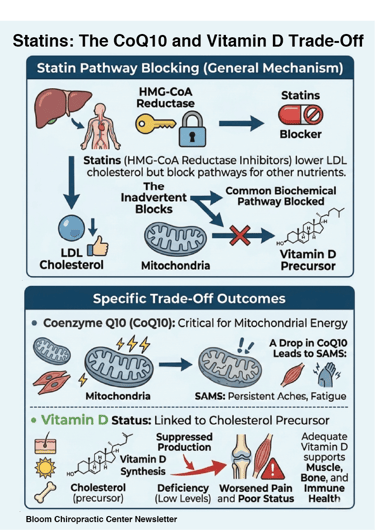
HMG-CoA reductase inhibitors, commonly known as statins, are effective at lowering LDL cholesterol and potentially reduce the risk of cardiovascular events. However, the exact biochemical pathway used to halt cholesterol production also inadvertently blocks the synthesis of several vital nutrients.
Coenzyme Q10 (CoQ10): Statins block the mevalonate pathway, which is required to create cholesterol. Unfortunately, this identical pathway is responsible for producing CoQ10—a compound essential for mitochondrial energy production. A drop in CoQ10 levels frequently manifests as statin-associated muscle symptoms (SAMS), including persistent muscle aches, weakness, and fatigue.
Vitamin D: Because cholesterol is a direct biochemical precursor to vitamin D synthesis, suppressing its production can trigger or worsen a vitamin D deficiency. Clinical studies have revealed a strong correlation between insufficient vitamin D status and severe statin-induced muscle pain. Maintaining adequate vitamin D is crucial, as it supports muscle fiber constitution, bone density, and immune regulation.
Statins: The CoQ10 and Vitamin D Trade-Off
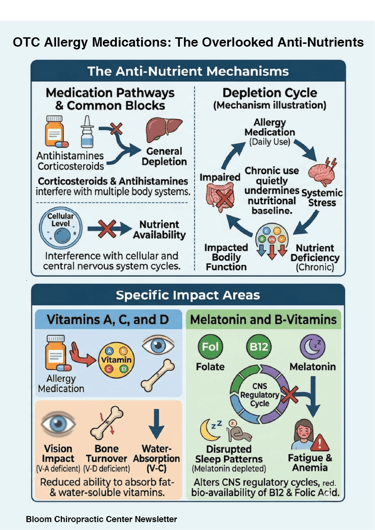
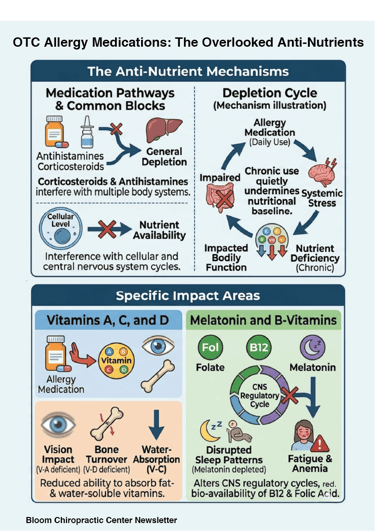
As allergy seasons become longer and more intense, millions of individuals rely daily on over-the-counter antihistamines and corticosteroids to manage symptoms like sneezing, itching, and congestion. While these medications provide rapid symptomatic relief, chronic usage can quietly undermine your nutritional baseline.
Vitamins A, C, and D: Long-term use of certain allergy medications, particularly corticosteroids and specific antihistamines, has been linked to a diminished capacity to absorb and utilize fat-soluble vitamins like vitamins A and D, as well as water-soluble vitamin C. Over time, a lack of vitamin A can impact vision, while a decline in vitamin D impacts bone turnover.
Melatonin and B-Vitamins: Chronic antihistamine use can interfere with the central nervous system's regulatory cycles, occasionally depleting natural melatonin stores and leading to disrupted sleep patterns. Furthermore, these medications can reduce the bio-availability of vitamin B12 and folic acid, occasionally contributing to unexplained fatigue or macrocytic anemia.
OTC Allergy Medications: The Overlooked Anti-Nutrients
Medications and lifestyle habits play a complex role in modern healthcare. Recognizing that these substances act as nutrient depleters does not mean you should abruptly stop prescribed therapies. Instead, it highlights the importance of targeted, proactive nutrition.
If you smoke, are taking a daily statin, or depend on routine allergy relief, talk to your healthcare provider about monitoring your micronutrient levels. Supplementing intentionally with high-quality CoQ10, vitamin C, vitamin D, and a methylated B-complex can help fill the metabolic gaps left behind by these hidden robbers, ensuring your body has the raw materials it needs to thrive.
How Can We Help
At Bloom Chiropractic Center, we help identify potential nutrient imbalances through a variety of assessment methods, including muscle testing as well as blood, urine, stool, and saliva testing. We also offer high-quality clinical-grade supplements designed to help restore balance and support overall wellness.
Schedule an appointment today for muscle testing and functional medicine nutritional evaluation to take the next step toward better health and wellness
Empowering Your Health Strategy
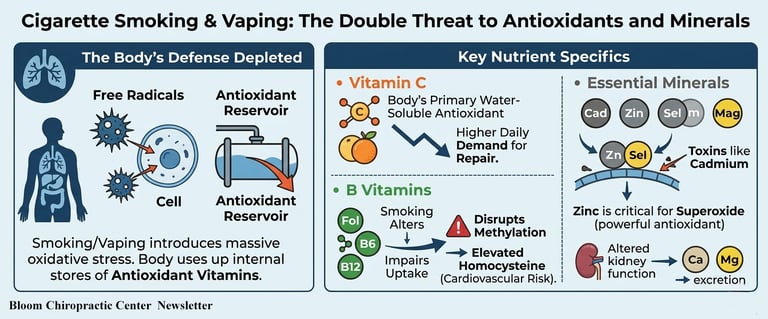
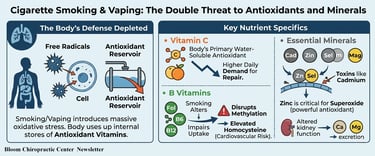
Vitamin C: This is the body’s primary water-soluble antioxidant. Because smoking accelerates the destruction of vitamin C, smokers have significantly lower circulating levels than non-smokers. Research indicates that the daily demand for vitamin C increases drastically just to maintain basic tissue repair.
B Vitamins (Folate, B6, and B12): Smoking alters folate metabolism and impairs the uptake of vital B vitamins. A deficiency in these specific nutrients disrupts methylation and leads to elevated levels of homocysteine—an amino acid linked to an increased risk of cardiovascular disease.
Essential Minerals: Toxins like cadmium found in tobacco smoke actively deplete zinc and selenium. Zinc is a critical mineral needed to manufacture superoxide dismutase, one of the body's most powerful native antioxidants. Furthermore, nicotine-induced stress can alter kidney function, causing increased excretion of foundational electrolytes like calcium and magnesium.
Three of the most pervasive offenders in modern society are cigarette smoking, statin therapy, and over-the-counter (OTC) allergy medications. Understanding how these factors rob your body is the first step toward reclaiming your cellular health.
References
Penn State Research Database & NHANES Data Analysis: Serum Vitamin C Levels in Users of Electronic Cigarettes, Cigarette Smokers and Nonsmokers. Clinical study confirming that e-cigarette users share the same profound Vitamin C deficiencies and elevated oxidative stress profiles as traditional smokers.
Current Neuropharmacology / PubMed Central (PMC12645129): Vitamin C Protects from Impairment of Memory Induced by E-Cigarette Aerosol Exposure. Research documenting how e-cigarette aerosols deplete native antioxidant enzymes and trigger localized cellular inflammation.
Journal of Medical Research and Health Sciences (JMRHS): The implications of E-cigarettes or "vaping" on the nutritional status. Clinical review identifying the links between vaping, chemical additives, and the subsequent malabsorption of essential minerals like Calcium, Iron, and Magnesium.
Mayo Clinic Proceedings & American Journal of Cardiology: Clinical reviews assessing the inhibition of the mevalonate pathway by statins, resulting in reduced CoQ10 concentrations in muscle tissue and subsequent myalgia.
PubMed Central (PMC6452565) - Vitamin D Serum Levels in Patients with Statin-Induced Musculoskeletal Pain: Clinical study establishing the strong correlation between vitamin D deficiency/insufficiency and the severity of statin-associated muscle symptoms (SAMS).
Michigan State University (MSU) Health Care Pharmacy & Lumistry Clinical Guidelines: Pharmacological analysis identifying drug-induced nutrient depletion risks associated with long-term corticosteroid and antihistamine therapies, specifically noting depletions in vitamins A, B9, B12, C, D, and melatonin.